Roger Williams Limited Edition Gold Piano - Steinway & Sons
About Roger
Roger Williams was one of the most celebrated and successful pianists in American music history. He rose to international fame in 1955 when his massive hit recording of Autumn Leaves became the only piano instrumental ever to reach No. 1 on the Billboard charts. Selling more than two million copies, it remains the greatest-selling piano recording of all time.
Recognized by Billboard Magazine as the greatest-selling pianist in recording history, Roger Williams developed a signature style that blended classical elegance with the warmth of popular music. His breathtaking artistry and expressive interpretations captivated audiences for more than five decades, establishing him as one of the twentieth century's most beloved instrumental recording artists.
Music historian Joseph Lanza recognized Williams for cultivating “a flair for making dramatic sweeps from classical to jazz to country to soft rock-and-roll,” ultimately describing him as “the greatest popular pianist in history.”
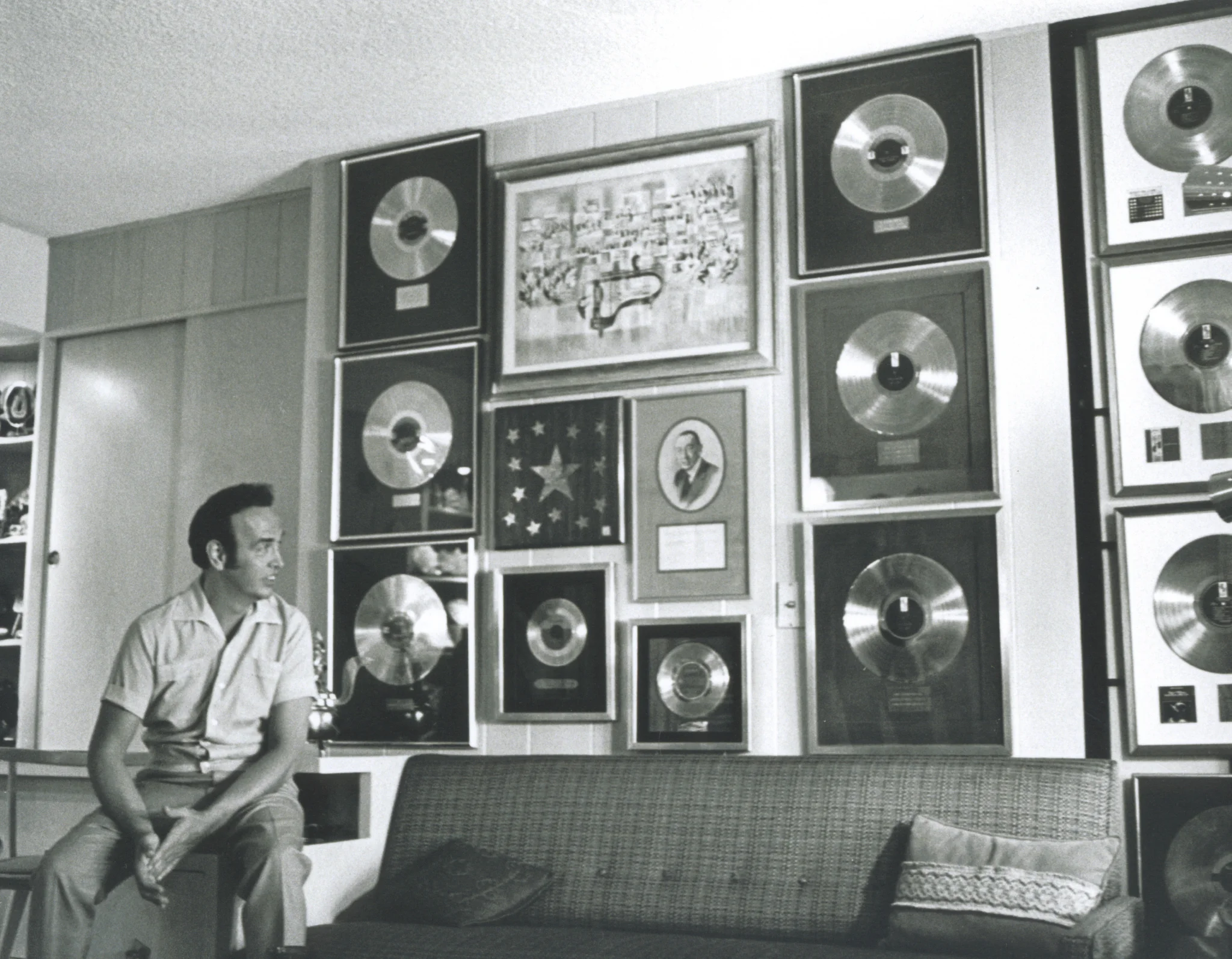
Roger and his Gold Records
Between 1955 and 1980, Roger earned 38 hit albums and 22 hit singles, releasing more than 125 albums during his extraordinary career. His timeless recordings—including Autumn Leaves, Born Free, The Impossible Dream, Maria, Till, Lara's Theme (Somewhere My Love), Nadia's Theme, and Somewhere in Time—introduced millions around the world to the beauty of the piano and earned him 21 Gold and Platinum records.
“Undeniably one of the greatest pianists of the 20th Century. His illustrious career in music is unparalleled.”
Roger's many White House appearances earned him the distinguished title "The Pianist to the Presidents." He performed for nine Presidents of the United States, from Harry S. Truman through George H. W. Bush. Beyond the White House, his extraordinary artistry graced some of the world's most celebrated stages—including Carnegie Hall and the Hollywood Bowl—while his acclaimed PBS television specials introduced his music to millions of viewers across America.
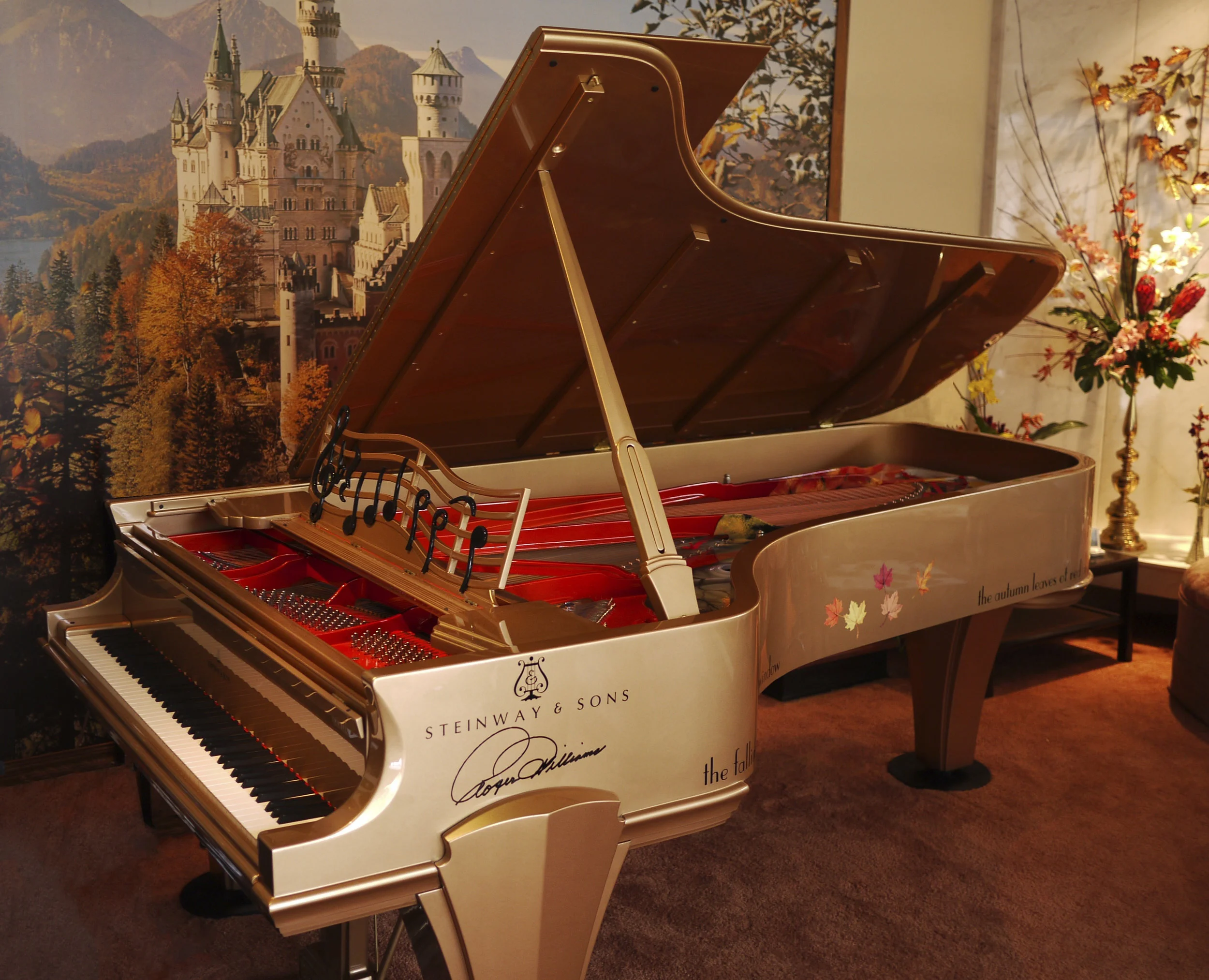
A distinguished Steinway Artist, Roger became the first recipient of Steinway & Sons' “Lifetime Achievement Award” in 1996 and, on his 80th birthday, was further honored with the “Roger Williams Limited Edition Gold Piano”—the first Steinway Art Case Piano ever created to honor a pianist.
Born Louis Weertz in Omaha, Nebraska, Roger displayed extraordinary musical gifts from an early age. By the age of twelve, he could play thirteen instruments and reproduce virtually any piece of music entirely by ear. Following distinguished military service during World War II, advanced studies at Drake University and The Juilliard School, and years of determination as a struggling young musician in New York, Roger's perseverance culminated in the recording that changed his life— Autumn Leaves.
Roger's career was defined not only by remarkable success, but also by generosity, patriotism, kindness, and a lifelong passion for music education. His acclaimed Piano Marathons raised awareness for music in schools, and his public television concerts helped raise millions of dollars for PBS stations nationwide. His achievements were recognized through honorary doctorates, civic honors, inclusion in the Congressional Record, and official recognition in the Presidential Diaries.
Today, Roger Williams remains one of America's most treasured musical legends. Revered around the world as "Mr. Piano," his timeless recordings continue to introduce new generations to the beauty of the piano, securing his place among the most beloved and influential instrumental artists in music history.
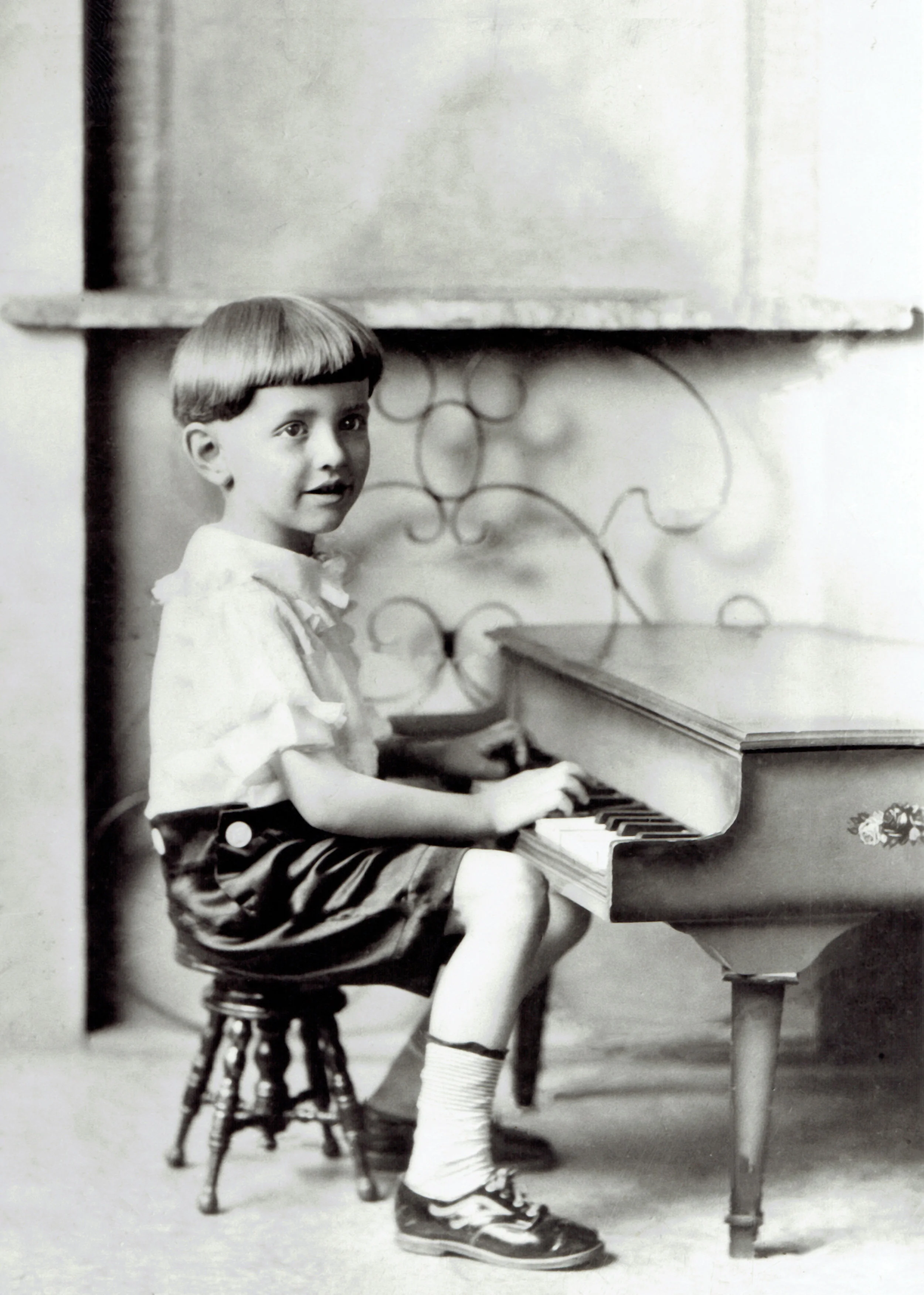
Roger at three years old.
Biography
Roger Williams was born Louis Weertz on October 1, 1924, in Omaha, Nebraska. When he was just one year old, his family moved to Des Moines, Iowa, where his extraordinary musical journey began.
Roger was born into a deeply musical family. His father, a Lutheran minister, built St. John's Lutheran Church into the largest Lutheran congregation in America, while his mother was a gifted violinist, music teacher, and college orchestra conductor whose influence nurtured Roger's extraordinary talent and inspired his lifelong love of music.
Roger began playing the piano at the age of three. By twelve, he could play thirteen musical instruments and reproduce virtually any piece of music entirely by ear—an astonishing gift that foreshadowed the remarkable career ahead. As a young teenager, he served as organist and choir director at his father's church, developing the confidence, discipline, and musicianship that would define his life as one of America's most beloved pianists.
For eleven years, Roger studied piano with Hannah Roe, whose own musical training traced back to Berlin, where she learned from the legendary Russian pianists Rosina and Josef Lhévinne. Hannah marveled that by the age of seven, Roger could hear almost any tune just once and play it back perfectly on the piano—even though he "hardly knew one note from another." Recognizing this extraordinary gift, she deliberately avoided playing new pieces for him before lessons, insisting that he first learn to read music rather than rely solely on his remarkable ear.
A man of many talents, Roger's father had once been a professional boxer and taught his son to box as well, believing it would help him withstand the teasing that often came with being both a preacher's son and a gifted young musician. That unique blend of strength, discipline, and artistry would become a defining characteristic throughout Roger's life.
Roger's lifelong warmth and generosity toward his audiences were shaped by a childhood experience in Des Moines. After attending a concert by the legendary pianist Ignacy Jan Paderewski, the young Roger waited outside in the cold for more than 45 minutes, hoping to meet his musical hero. When Paderewski finally emerged, he hurried directly to a waiting automobile without acknowledging the admirers gathered outside.
The experience left a lasting impression on Roger. Years later, he recalled:
"I didn't even get near enough to touch him or get an autograph. It was then and there that I resolved that if ever I became famous, I would never disappoint anyone who wanted to talk to me."
Roger faithfully kept that promise throughout his career, remaining after concerts to greet audiences, sign autographs, and personally thank those who had come to hear his music.
Roger's commitment to his audiences became legendary. Throughout a career spanning more than five decades, he never failed to appear for a scheduled concert, even while battling high fevers or enduring personal family tragedies. He believed people came to his concerts to forget their troubles, find comfort, and leave feeling happier than when they arrived.
"Music should make people feel better when they leave than when they came."
—Roger Williams
Roger never wanted to burden his audiences with his own troubles or disappoint those who had come to hear him perform. The only scheduled concert he ever missed came when he and the accompanying orchestra arrived to discover they had been given different performance dates—the orchestra believed the concert was the following day.
Roger graduated from Des Moines’ North High School in 1942, but for one year in 1940-1, he attended Hollywood High School when his father’s health required the drier climate. There he studied with Norwegian pianist Philip Tronitz at the Hollywood Professional School, who admired Roger's remarkable talent but told Roger he had begun his serious piano studies too late to become a concert pianist. Roger, however, remained determined to prove him wrong.
Back in Des Moines, Roger began performing professionally at Babe's Supper Club, earning $6 a night—and all the spaghetti he could eat. He also regularly hosted his own radio programs on KRNT, KCBC, and at WHO, where he met a young radio sports announcer known as "Dutch" Reagan—the future President of the United States, Ronald Reagan.
During the summer months, Roger traded the piano bench for the rugged wilderness of northern Minnesota, working as both a lumberjack and a fishing guide. The experience instilled a strong work ethic, self-reliance, and determination—qualities that would serve him well throughout his extraordinary musical career.
In 1942, Roger enrolled at Drake University to study classical piano, but his love for popular music soon set him on a different course. He was famously expelled after practicing "Smoke Gets in Your Eyes" instead of his assigned classical repertoire—a pivotal moment that ultimately redirected his life toward the music that would make him world-famous.
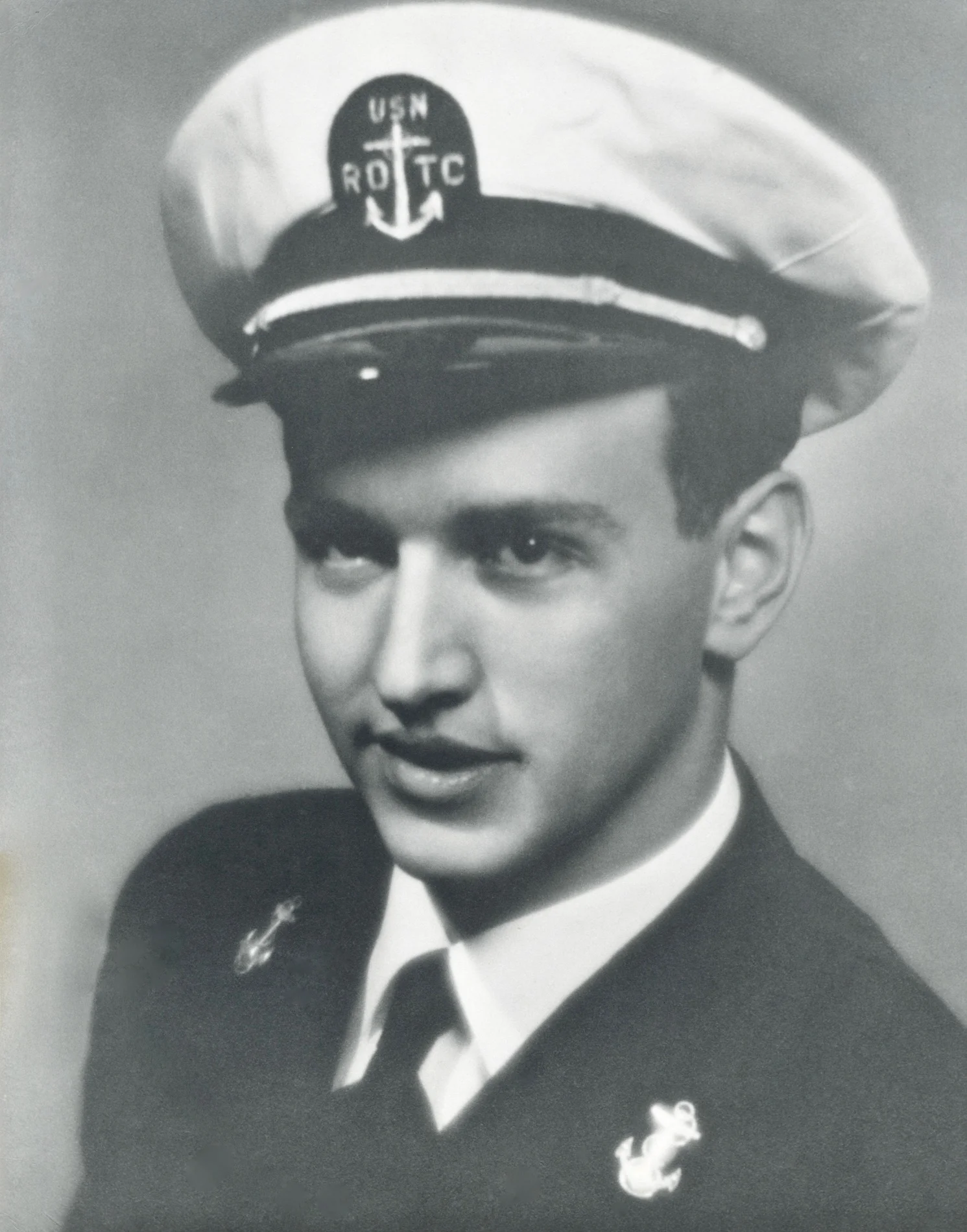
US Navy ROTC
Roger attempted to enlist in the U.S. Navy in Des Moines during World War II, but was rejected because of his severe asthma. Determined to serve his country, he traveled to Los Angeles, thinking his asthma hadn’t been a problem there. There, he supported himself by playing piano at the Sarnez Restaurant.
The move to Los Angeles significantly improved Roger's health, allowing him to fulfill his dream of military service. He entered the U.S. Navy ROTC, completed boot camp at Farragut Naval Training Station in Idaho, and, after aptitude testing revealed exceptional engineering ability, was assigned to study engineering at Idaho State University. Even while serving, Roger balanced military discipline with his love of music, performing piano concerts for fellow servicemen while also excelling in the boxing ring. He went on to become the Navy's middleweight boxing champion, winning 22 consecutive bouts—including 14 by knockout—a testament to the determination, resilience, and competitive spirit that defined every aspect of his life.
Roger later joked about his boxing career: "To show you what a good fighter I was, I broke my nose three times and never broke my hand once."
Among Roger's proudest achievements was being elected Man-O'-Warsman by his fellow servicemen. His commanding lieutenant later described the distinction this way:
"He became so tremendously popular with the men because he out-scrubbed, out-drilled, and out-boxed them. After boot camp, he was elected the Outstanding Boot—and that's a real honor."
Roger later said that being named Man-O'-Warsman meant more to him than any other accolade he received during his lifetime.
During his service, Roger narrowly escaped a career-ending tragedy when a gunnery accident nearly cost him three fingers on his right hand. Faced with the possibility of amputation, he pleaded with the surgeon to save them. Through months of determination, intensive therapy, and relentless exercise, he miraculously regained the full use of his fingers.
His remarkable recovery from the gunnery accident allowed him to continue his officer training in Seattle. Just two weeks before he was scheduled to receive his commission as an officer, his severe asthma returned, forcing him into the hospital and fighting for his life. The Navy subsequently issued him a medical discharge, bringing an abrupt end to his military career despite his deep desire to serve.
After his military service, Roger returned to Idaho State University to perform a concert, where he met Joy Dunsmoor, a student and beauty queen. Their first date was dinner at a Chinese restaurant on Lovejoy Street, and the very next evening Roger proposed. Joy thought he was joking—but by Christmas Eve, she had accepted.
On July 30, 1948, Roger married Joy Dunsmoor at his father's church, St. John's Lutheran Church in Des Moines, Iowa. Roger later joked that it may have been "the cheapest wedding ever." He provided the wedding music himself, his father and uncle—Pastors Frederick Weertz and Alfred Beil—officiated the ceremony, the church was free, and nearly 1,500 members of the congregation gathered to celebrate the occasion. Joy became Roger's devoted wife for the next 26 years and the mother of their three children.
Roger returned to Drake University, earning both his Master's and Doctorate of Music in 1951. Using his GI Bill, he continued his advanced studies at The Juilliard School in New York City with legendary jazz pianists Teddy Wilson and Lennie Tristano. This remarkable combination of classical training, jazz innovation, military leadership, athletic discipline, and natural musical genius forged the artist who would soon captivate audiences worldwide as "Mr. Piano."
Determined to pursue a career in music, Roger returned to Des Moines for his wife and young daughter, and together they moved to New York. His first major national breakthrough came in October 1951, when Teddy Wilson encouraged him to compete on the popular radio program Arthur Godfrey’s Talent Scouts. Roger won, introducing his remarkable talent to audiences across America.
A few months later, another opportunity came quite by chance. Roger had been asked to accompany a fellow Juilliard singer on the television program Chance of a Lifetime. When she got cold feet, Roger asked if he could compete instead—and won, performing I Got Rhythm and taking home the $1,000 prize. Hosted by Dennis James, the nationally televised program brought Roger even greater exposure. Roger later recalled that the prize money arrived just in time, allowing him to catch up on his overdue rent.
That national exposure also led to his first recording contract, and in 1952 he recorded his debut album, Louis Weertz: Keyboard Kings, for MGM Records. The recording did not yet bring him the success he was seeking, but it marked another important step toward the career that was soon to come.
Despite the national exposure, lasting success did not come overnight. For the next two years, he struggled to support his young family—his wife, Joy, and two young daughters. He accepted every opportunity to perform, playing piano in clubs and lounges, including the Forest Hills Inn Tournament Grille in New York and the Lighthouse Inn in Connecticut. Night after night, cigarette smoke aggravated his asthma so severely that he seriously considered accepting a position as a music professor at Drake University and returning to Iowa. Before he made that decision, however, fate intervened.
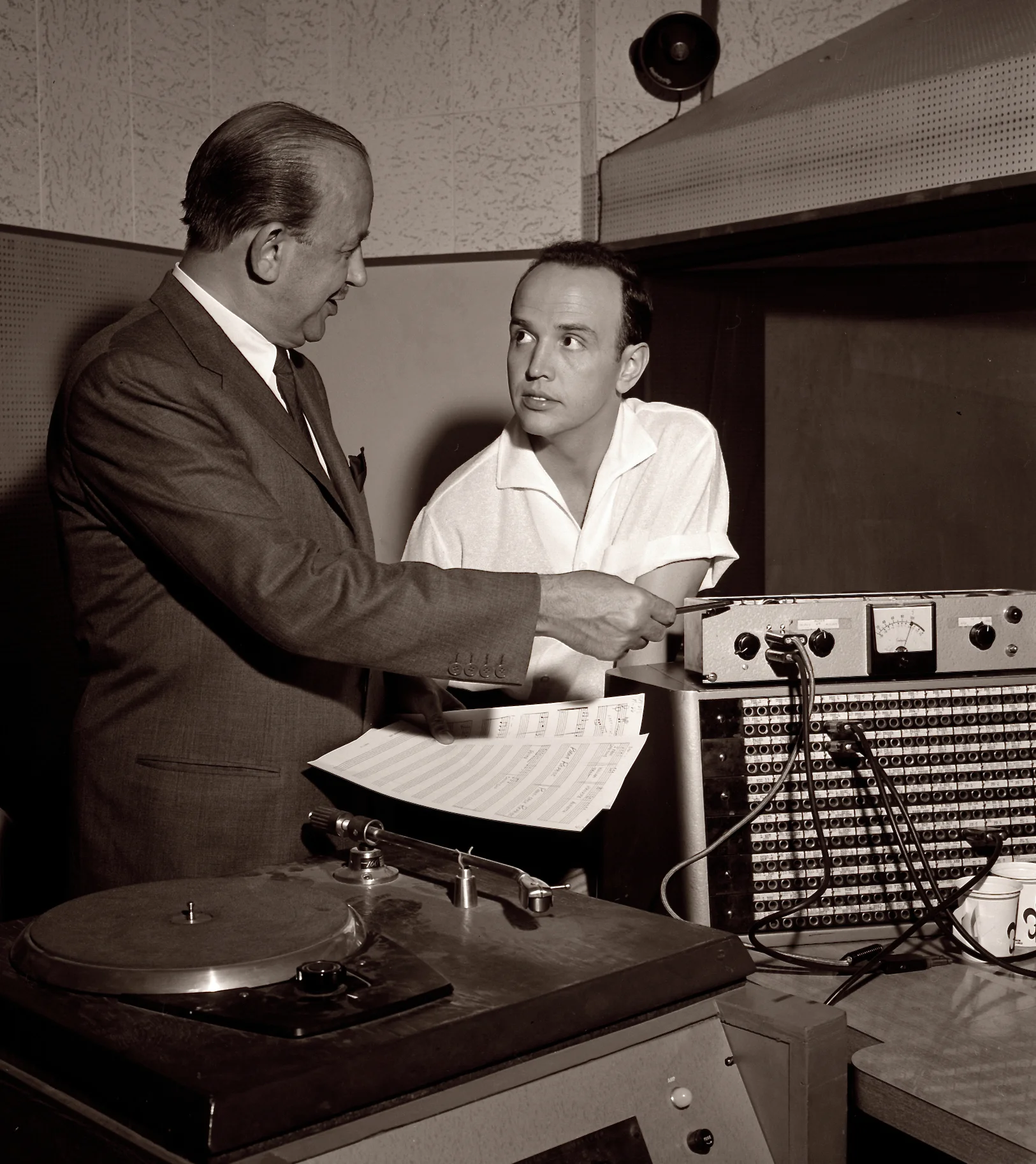
David Kapp at Roger's Recording Session
In 1954, Roger's career took a dramatic turn when David Kapp, founder of the newly established Kapp Records, discovered him performing at New York City's Madison Hotel Café. Impressed by Roger's artistry and his rare ability to "play the way a singer sings"— giving each melody the phrasing and emotion of a great vocalist—he immediately signed Roger as the label's first artist. That expressive quality became the hallmark of Roger Williams's unmistakable style. Kapp also insisted that Roger adopt a stage name, selecting "Roger Williams," after the founder of Rhode Island, because he believed audiences would recognize and remember the familiar name.
Kapp was determined to preserve Roger's unique ability to "play the words." Whenever Roger's improvisations drifted too far into jazz, Kapp would roll a large wooden cigar-store Indian into the studio with a sign reading, "Where's the melody?" It was a humorous reminder that Roger's greatest gift was making the piano sing—a quality that became the hallmark of his artistry.
Roger's first album for Kapp Records, The Boy Next Door, was recorded without orchestral accompaniment because David Kapp could not yet afford to hire an orchestra. Although the album received an encouraging response, Kapp believed Roger's lyrical, expressive style deserved the richness of a full orchestral setting. An unexpected opportunity to record with an orchestra soon presented itself.
Soon afterward, singer Jane Morgan was scheduled to record with an orchestra, but she did not have enough material to fill the entire session. Seeing an opportunity, Kapp challenged Roger to create an arrangement of Autumn Leaves over a single weekend so it could be recorded at the end of Morgan's session the following Monday. Although the song had already been recorded by several well-known artists, none had turned it into a hit. Neither Kapp nor Roger could have imagined that this last-minute recording would become one of the most iconic piano performances in popular music history.
With only twenty minutes remaining in the session—and unwilling to pay for costly studio overtime—Kapp hurriedly assembled the orchestra for a brief rehearsal. Roger recorded Autumn Leaves in just two takes. The first exceeded the three-minute limit preferred by radio stations, so Kapp asked him to play the arpeggios faster. The second came in at 2 minutes and 59 seconds—perfectly timed for radio airplay.
The result was historic. Autumn Leaves spent four consecutive weeks at No. 1 on the Billboard charts, remained in the Top 40 for twenty-six weeks, and sold more than two million copies. More than seven decades later, it remains the greatest-selling piano recording of all time and the only piano instrumental ever to reach No. 1 on the Billboard singles chart.
The unprecedented success of Autumn Leaves transformed Roger Williams almost overnight into one of the nation's most sought-after performers. Concert tours, television appearances, best-selling recordings, and performances with many of the world's leading symphony orchestras quickly followed. His distinctive blend of classical technique and popular melodies captivated audiences of every age, establishing him as one of the most successful and beloved instrumental recording artists in American history.
As Roger's career continued to flourish, the family permanently settled in Los Angeles, California, in 1959. Soon afterward, their only son, James, was born, completing the Williams family.
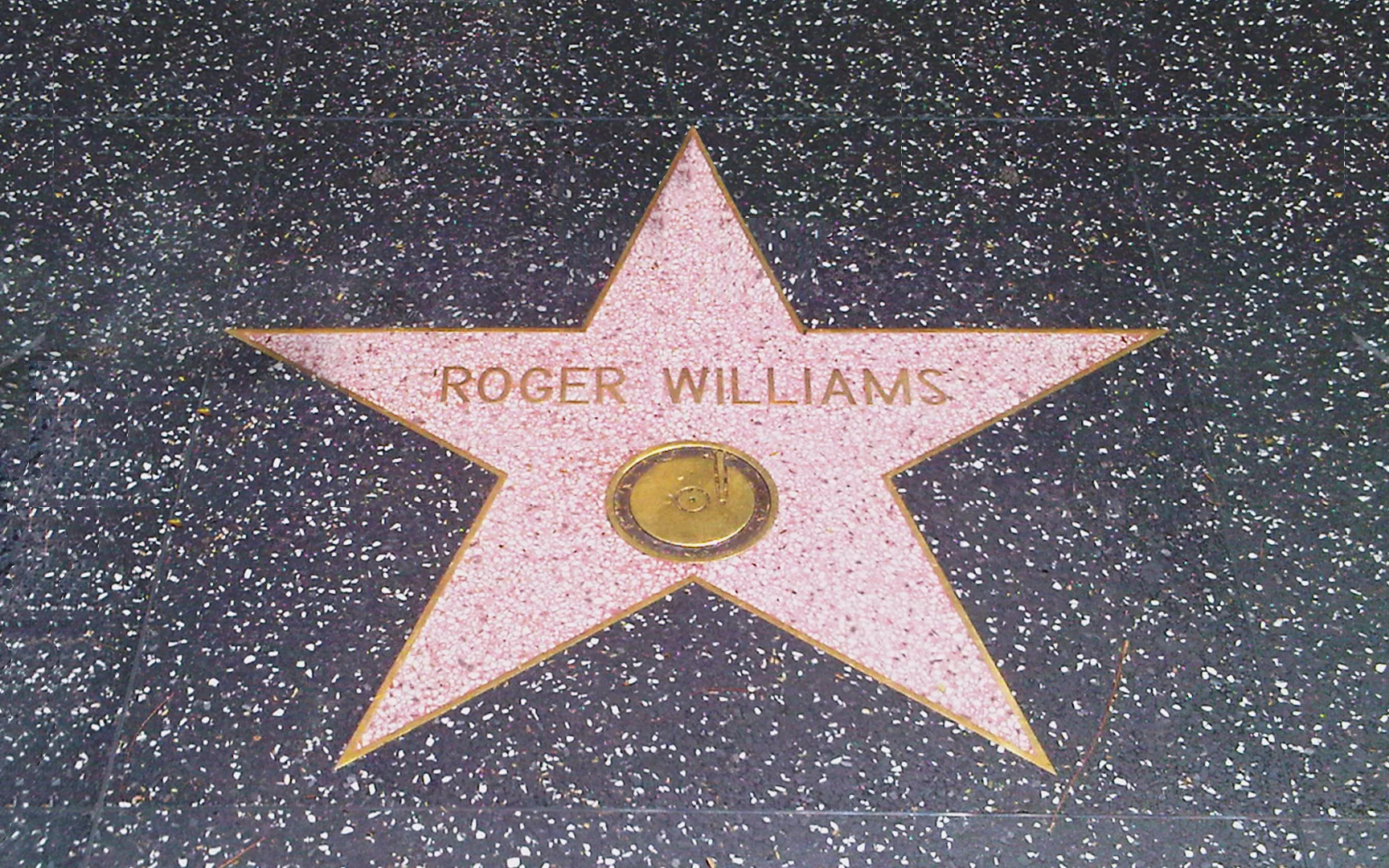
On February 8, 1960, Roger Williams became the first pianist honored with a star on the Hollywood Walk of Fame. Located at 1533 Vine Street, just steps from Hollywood Boulevard, the star remains a lasting tribute to one of America's most beloved pianists.
Roger’s music also reached millions through film and television. His recordings were featured in the motion pictures More Than a Miracle (1967), Somewhere in Time (1980), “Nature Boy” in Untamed Heart (1993), and “Little Town of Bethlehem” in Reckless (1995). His unforgettable interpretation of the theme from Somewhere in Time became one of the defining recordings of his later career and earned him his final Gold Record. In 1967, Roger also performed his hit recording Born Free during the Academy Awards ceremony in a tribute to the nominees for Best Original Song and Best Original Score.
Over the course of his extraordinary career, Roger Williams performed with many of the world's leading symphony orchestras and appeared at some of the most prestigious concert venues, including Carnegie Hall, the Hollywood Bowl, and the White House.
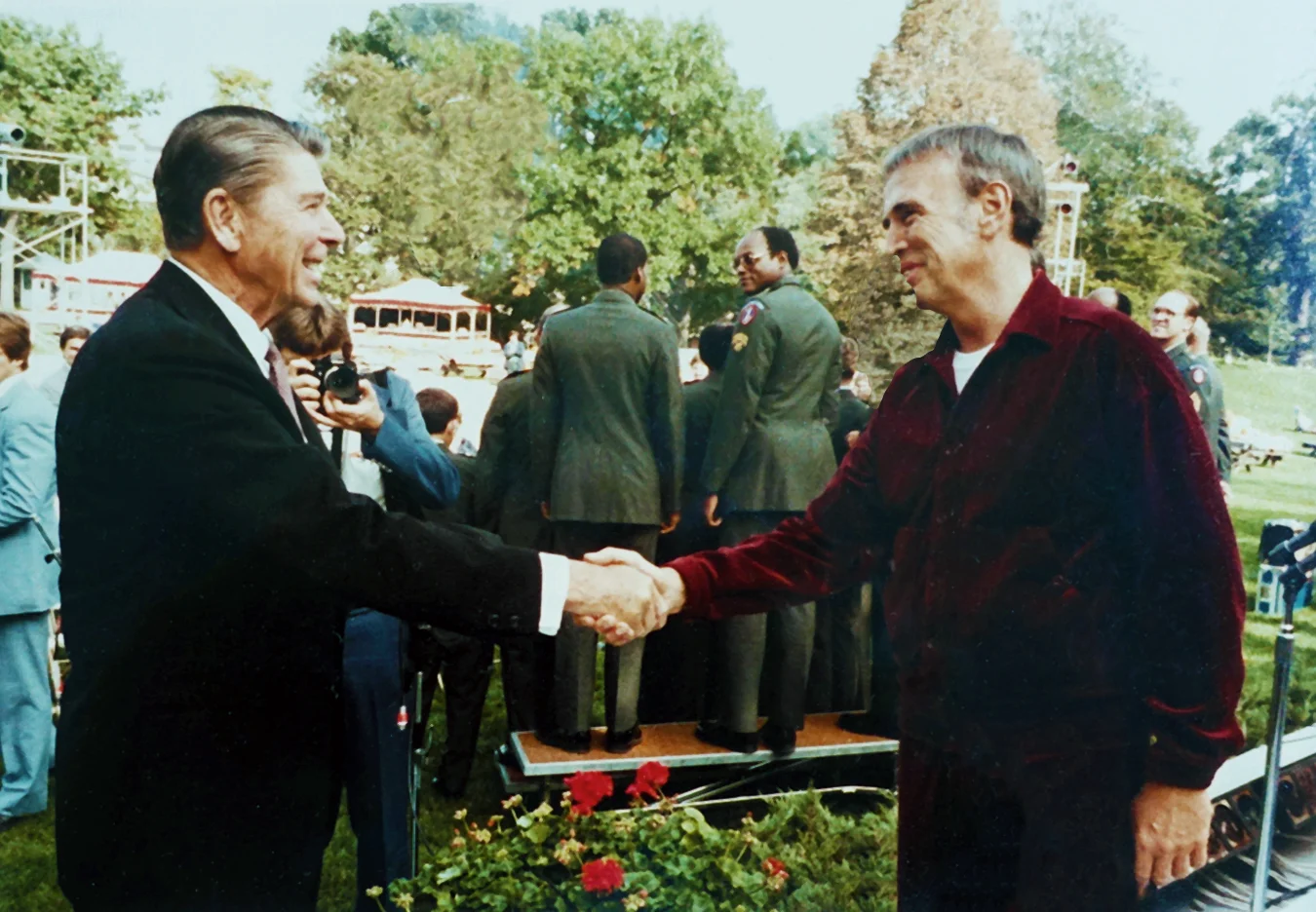
President Ronald Regan with Roger
His many White House performances earned him the title "Pianist to the Presidents." Roger performed for nine Presidents of the United States, from Harry S. Truman through George H. W. Bush. His final White House appearance was a special performance for First Lady Laura Bush and the spouses of foreign ambassadors—a fitting and elegant closing chapter to an extraordinary career.
Roger Williams's extraordinary achievements were recognized throughout his lifetime with numerous honorary doctorates, civic honors, and distinguished awards. His inclusion in the Congressional Record and the official Presidential Diaries reflects the rare distinction of an artist whose career became intertwined with the cultural and presidential history of the United States.
These honors recognized not only his extraordinary musical accomplishments, but also the lasting impact he made as a cultural ambassador whose artistry reached audiences from the concert hall to the White House. His acclaimed public television specials, Pop Goes the Ivories and An Evening with Roger Williams, helped raise millions of dollars for PBS stations nationwide while introducing his music to audiences across the country. One of these landmark performances was filmed by KOCE-TV at the Richard Nixon Presidential Library and Museum, where Roger was officially recognized as "The Pianist to the Presidents"—a fitting tribute to a career that bridged music, history, and public service.
On December 1, 1985, Roger married actress Louise De Carlo at the Crystal Cathedral in Garden Grove, California. Together, they shared the many experiences and travels of Roger's later concert career during their fifteen years of marriage.
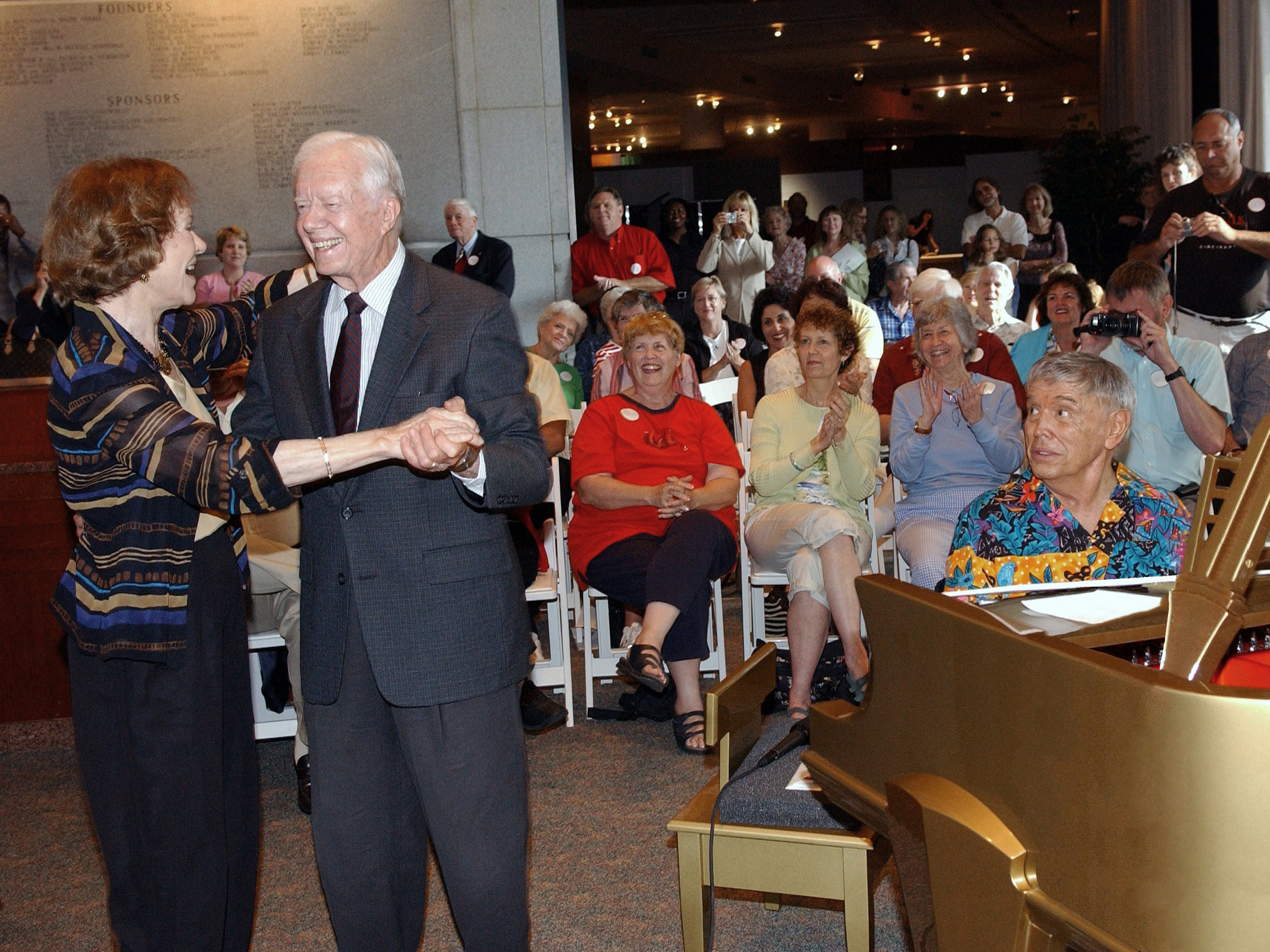
President Jimmy Carter and Rosalynn dancing
In 1999, on his 75th birthday, Roger embarked on a remarkable new chapter by launching a series of annual Piano Marathons, performing continuously for 12 hours or more. Possessing the extraordinary ability to play more than 10,000 melodies entirely by ear, he captivated audiences by creating spontaneous medleys from songs requested live, showcasing an improvisational gift few pianists have ever possessed.
These unforgettable marathon performances were presented at some of the nation's most distinguished venues, including the Ronald Reagan Presidential Library, the Richard Nixon Presidential Library and Museum, and the Jimmy Carter Presidential Library and Museum, where Roger and President Jimmy Carter celebrated their mutual 80th birthdays together. Additional performances took place at Steinway Hall New York, Steinway Hall Scottsdale, and the Musical Instrument Museum.
Throughout his Piano Marathons, Roger became a passionate advocate for restoring music education in America's schools. He visited high schools across the country, speaking with students and performing to inspire the next generation of musicians. Believing that children had been robbed of the opportunity to experience the life-changing benefits of music education, he devoted more than 4,000 volunteer hours to the cause.
In recognition of his lifelong commitment to young people, music education, and the arts, California Governor Arnold Schwarzenegger presented Roger with the Champion of Youth Award.
On February 5, 2011, Roger Williams gave one of the final major performances of his career at Ronald Reagan's Centennial Concert at the Ronald Reagan Presidential Library. Following the performance, Roger joyfully remarked that he was "playing better than ever." Just a few weeks later, however, he received the devastating diagnosis of pancreatic cancer.
True to the courage, determination, and faith that had defined his life, Roger continued to create music while undergoing chemotherapy. During this difficult time, he released his final two albums, Roger Williams: The Man They Call "Mr. Piano" and Roger Williams: Golden Inspirational Hymns, and gave his final public concert in Palm Desert, California, on March 20, 2011.
Only seven months after his diagnosis, on October 8, 2011—just one week after celebrating his 87th birthday—Roger Williams passed away.
Roger Williams's extraordinary legacy lives on through his recordings, concerts, and the countless lives he touched through music. As "Mr. Piano," he transformed the piano into a voice that could sing, comfort, and inspire. More than a celebrated performer, he became an enduring ambassador for beautiful melody, leaving a musical heritage that continues to resonate with audiences around the world.